





![Box Office [March 2, 2026]: Did The Kerala Story 2 pass the Monday test? Find out](https://resize.indiatvnews.com/en/resize/newbucket/1200_-/2026/03/the-kerala-story-2-1-1772471665.jpg)











![2025 Rolex Monte-Carlo Masters: Altmaier [84th] vs. Alcaraz [3rd] Prediction, Odds and Match Preview](https://sportsbookwire.usatoday.com/wp-content/uploads/sites/16/2025/04/10192539-34.jpg?w=640#)














#)




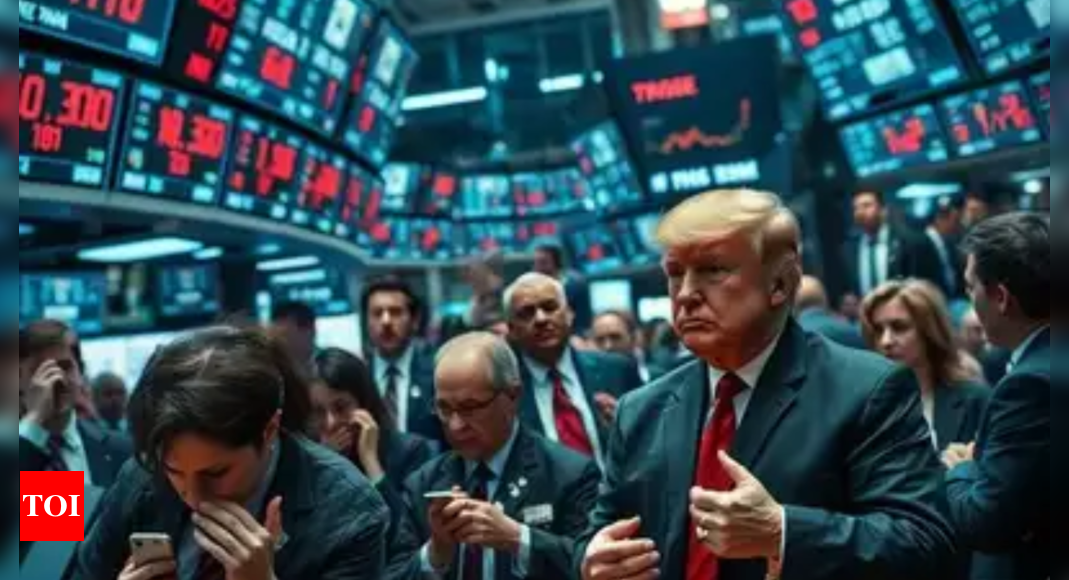
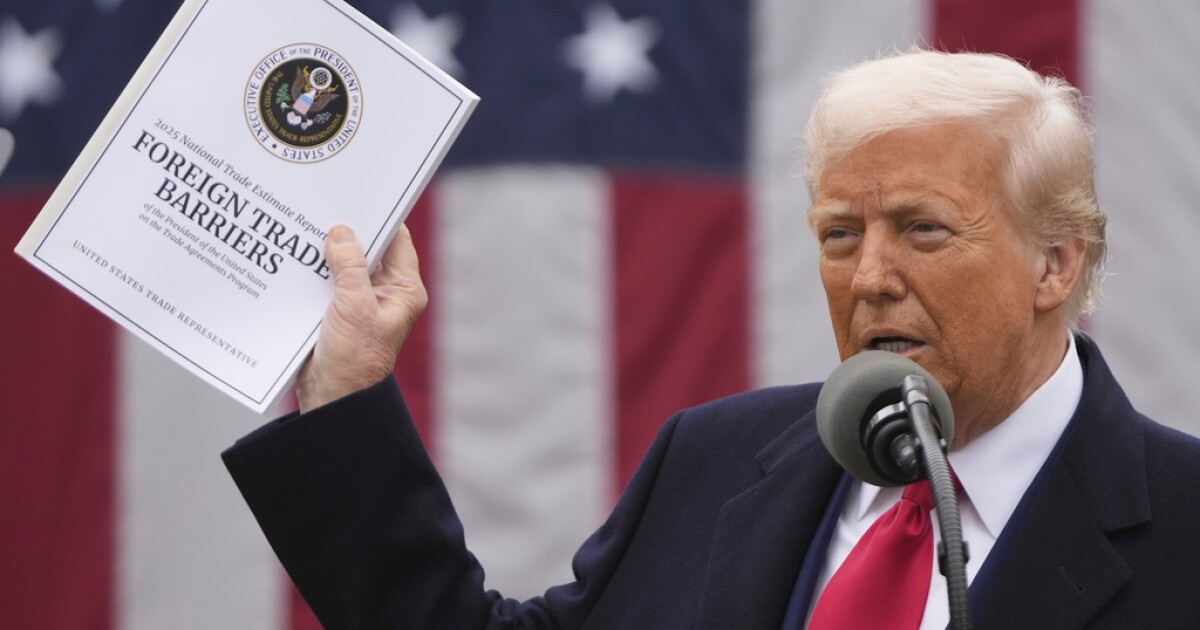
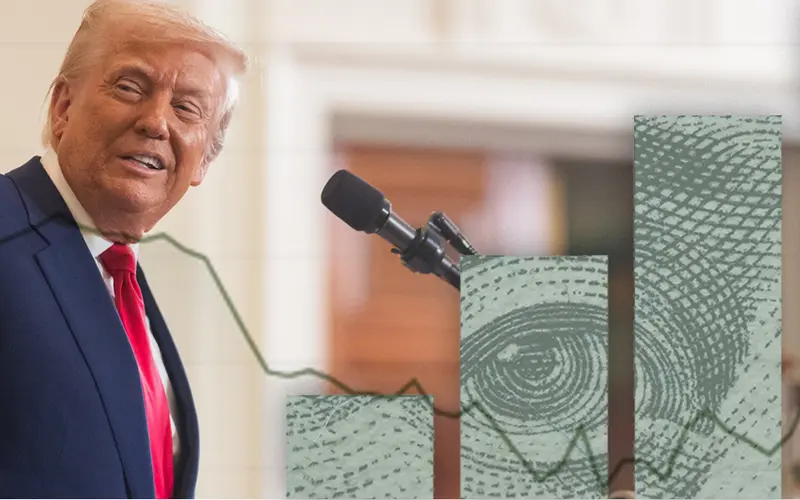
Trump, tariffs, and the lessons to learn from Machiavelli
In the post-Liberation Day world of Trump, tariffs, and the trade war that has begun in response to them, a new realist politics has emerged. Power alone rules the day. In such a world so-called ‘shared values’ mean nothing. Author and former intelligence officer, Andy Owen, argues that Trump is Machiavellian, but we must also be more Machiavellian in our response. To avoid a military war in which everybody loses, we must accept the new realist political landscape ruled by power, but we must also argue and stand for the idea that the best results for all on the international stage come as a result of democracy and peace. In February, former head of the UK’s Secret Intelligence Service, Alex Younger, claimed that, “we are in a new era where… international relations aren’t going to be determined by rules and multilateral institutions, they're going to be determined by men and deals.” He went on to draw a parallel with the Yalta conference of 1945, where “three strong men” on behalf of “the strong countries decided the fate of the small countries”. At Yalta on the Crimean Peninsula in present-day Ukraine, Franklin D. Roosevelt (FDR), Joseph Stalin and Winston Churchill - very different leaders, from states with different forms of government - came together to shape a new international order out of the chaos of the war.A new US president is sitting down with a Russian dictator again, to shape a new international order. Whilst the question of where we place the border between Europe and Russia remains key, this time Britain does not have a seat at the table. Younger believes those that do are President Trump, President Putin and President Xi, and their mindset is similar to those at Yalta: the strong decide the fate of the weak. We are in another time of geopolitical transition.An era of US hegemony is waning. Former Chancellor Scholz, President Macron, and Putin have claimed we are moving into a multipolar world where states cluster around three or more regional and global powers, motivated by survival and mutual benefit rather than any specific ideology. I prefer “multi-matrixed” world. An anchoring of security, trade, and energy policies onto one or more new “poles” will not be enough for states to thrive or even survive in this new era (especially considering the unstable internal politics and brittle economies that beset these poles). Instead, states are developing complex matrices of relationships with different (sometimes contradictory) partners, both other states and multinational companies and institutions, while mitigating interplaying risks outside of the control of any single state or intrastate body. In this new order diplomats and politicians are citing the need for political realism when it comes to international relations.___A key question to ask, as alliances built on imagined shared values are fragmenting and we move to an era of competition and conflict, is “how do those not at the table understand the new order and protect themselves from the worst impacts of it?”___Political realism is contrasted with idealism or liberalism, which emphasizes cooperation, and stresses the competitive nature of international politics. Realists see states concerned with their security above all else and acting in pursuit of their own national interests, struggling for power in an international system closer to anarchy than order. Realists are also associated with a skepticism towards ethical norms in relations among states.A key question to ask, as alliances built on imagined shared values are fragmenting and we move to an era of competition and conflict, is “how do those not at the table understand the new order and protect themselves from the worst impacts of it?” Political Scientist Kenneth N. Waltz splits the causes of war into three categories, which he calls "images". The first image is that of the nature of man, the building block of all states. The second is the internal nature of states that comprise the international system. It focuses on how states organise themselves and the impact that internal organisation has on conflict between them. The third focuses on the structure of the system states are in, and how this influences the individuals and states within it. Political realists who have lived through similarly tumultuous times have provided great insight into all three images.___For Machiavelli, the primary goal of a leader is to stay in power. A ruler should be prepared to do whatever is necessary to do this, including means many would consider unethical.___The most infamous political realist was Niccolo Machiavelli, who lived through a time when traditions and institutions were being uprooted, and smaller states were falling victim to the ambition of superpowers. Born in Florence in 1469, his best-known work, The Prince, based on his first-hand experience of diplomacy, is an attempt to guide rulers living in chaotic times. Machiavelli adopts a consequentialist morality, arguing that the virtues


In the post-Liberation Day world of Trump, tariffs, and the trade war that has begun in response to them, a new realist politics has emerged. Power alone rules the day. In such a world so-called ‘shared values’ mean nothing. Author and former intelligence officer, Andy Owen, argues that Trump is Machiavellian, but we must also be more Machiavellian in our response. To avoid a military war in which everybody loses, we must accept the new realist political landscape ruled by power, but we must also argue and stand for the idea that the best results for all on the international stage come as a result of democracy and peace. In February, former head of the UK’s Secret Intelligence Service, Alex Younger, claimed that, “we are in a new era where… international relations aren’t going to be determined by rules and multilateral institutions, they're going to be determined by men and deals.” He went on to draw a parallel with the Yalta conference of 1945, where “three strong men” on behalf of “the strong countries decided the fate of the small countries”. At Yalta on the Crimean Peninsula in present-day Ukraine, Franklin D. Roosevelt (FDR), Joseph Stalin and Winston Churchill - very different leaders, from states with different forms of government - came together to shape a new international order out of the chaos of the war.A new US president is sitting down with a Russian dictator again, to shape a new international order. Whilst the question of where we place the border between Europe and Russia remains key, this time Britain does not have a seat at the table. Younger believes those that do are President Trump, President Putin and President Xi, and their mindset is similar to those at Yalta: the strong decide the fate of the weak. We are in another time of geopolitical transition.An era of US hegemony is waning. Former Chancellor Scholz, President Macron, and Putin have claimed we are moving into a multipolar world where states cluster around three or more regional and global powers, motivated by survival and mutual benefit rather than any specific ideology. I prefer “multi-matrixed” world. An anchoring of security, trade, and energy policies onto one or more new “poles” will not be enough for states to thrive or even survive in this new era (especially considering the unstable internal politics and brittle economies that beset these poles). Instead, states are developing complex matrices of relationships with different (sometimes contradictory) partners, both other states and multinational companies and institutions, while mitigating interplaying risks outside of the control of any single state or intrastate body. In this new order diplomats and politicians are citing the need for political realism when it comes to international relations.___A key question to ask, as alliances built on imagined shared values are fragmenting and we move to an era of competition and conflict, is “how do those not at the table understand the new order and protect themselves from the worst impacts of it?”___Political realism is contrasted with idealism or liberalism, which emphasizes cooperation, and stresses the competitive nature of international politics. Realists see states concerned with their security above all else and acting in pursuit of their own national interests, struggling for power in an international system closer to anarchy than order. Realists are also associated with a skepticism towards ethical norms in relations among states.A key question to ask, as alliances built on imagined shared values are fragmenting and we move to an era of competition and conflict, is “how do those not at the table understand the new order and protect themselves from the worst impacts of it?” Political Scientist Kenneth N. Waltz splits the causes of war into three categories, which he calls "images". The first image is that of the nature of man, the building block of all states. The second is the internal nature of states that comprise the international system. It focuses on how states organise themselves and the impact that internal organisation has on conflict between them. The third focuses on the structure of the system states are in, and how this influences the individuals and states within it. Political realists who have lived through similarly tumultuous times have provided great insight into all three images.___For Machiavelli, the primary goal of a leader is to stay in power. A ruler should be prepared to do whatever is necessary to do this, including means many would consider unethical.___The most infamous political realist was Niccolo Machiavelli, who lived through a time when traditions and institutions were being uprooted, and smaller states were falling victim to the ambition of superpowers. Born in Florence in 1469, his best-known work, The Prince, based on his first-hand experience of diplomacy, is an attempt to guide rulers living in chaotic times. Machiavelli adopts a consequentialist morality, arguing that the virtues that make a good man (in Christian terms) are not identical to those that make a good ruler. At the time, ‘mirror books’ for princes claimed rulers should be just, generous, and clement and never act by sheer force, or by fraud. Machiavelli wanted to “to go to the “real truth of the matter, not to repeat other’s fantasies”. Human nature is beastly, fickle, and brutal. A description echoed by another realist, Thomas Hobbes, who in Leviathan claimed that each of us is seeking only to further our own ability to have the power to do what we like and avoid doing what we don’t like. This is a recipe for endless conflict, driven by competition, distrust and the pursuit of glory or status creating a “war of all against all”. This forever war is known as the Hobbesian “state of nature”. In this state Hobbes famously claims that life is “solitary, poor, nasty, brutish, and short”.
SUGGESTED VIEWING
The Tears of the West
With Roger Hearing, Rory Sutherland, Arlie Russell Hochschild, Angus Deaton
For Machiavelli, the primary goal of a leader is to stay in power. A ruler should be prepared to do whatever is necessary to do this, including means many would consider unethical. He claims, “it must be understood that a prince… cannot observe all those things which are considered good in men, being often obliged, in order to maintain the state, to act against faith, against charity, against humanity, and against religion”. To Machiavelli internal order and external security are necessary before there is even the possibility of men living lives of freedom and decency. The prince must have a mind disposed to “adapt itself according to the wind, and as the variations of fortune dictate, and... not deviate from what is good, if possible, but be able to do evil if constrained".Machiavelli uses statesman Cesare Borgia as an exemplar, who disguised his intentions, weakened his opposition, broke old loyalties, enriched allies, and eliminated rivals. His description gives us insight into several autocratic leaders today. He also explained how a leader could survive the vicissitudes of fortuna that brought war, disease, and chaos, and could protect the state by using the metaphor of a destructive, wild river that overflows in the winter months, when there is little one can do to alter its path. By building dykes and dams in the summer months, one can minimize its impact on settlements in its path. This long-term thinking is the mark of a good ruler.Over the decades of peace ensured by American military power, European leaders have not built the long-term dykes or banks needed to survive the vicissitudes of fortuna (such as the unfortunate change of American leadership). Machiavelli tells us, if by cruelty the dykes and banks are built and kept in good repair, then cruelty is the greatest mercy. If by practicing virtue they are torn down, virtue is the greatest vice. Those at the top table now are not impressed by virtue but by power. Our leaders must realise that for their citizens to live free to choose their values they must be prepared to fight those who care little for their way of life. Politicians, and those in the military and intelligence services must balance values and necessity. “Machiavellian” will remain a criticism, but honesty about our priorities and the balances that need to be managed can reduce hypocrisy and allow clarity in our approach.Machiavelli lived at a time where a state’s foreign policy was dominated by the nature of one “prince”. The characteristics of human nature and of specific leaders were key to understanding why conflicts happened. With the increase of autocracies this is again becoming true for many states - to understand Russia’s foreign policy a Machiaveillian study of Putin is essential - however, as states led by absolute monarchs declined in the nineteenth-century, more focus was directed to the nature of states themselves and Waltz’s second image.The idealistic Woodrow Wilson, the president that took America into the Great War and later founded the League of Nations, was convinced that democracies are peaceful because their governments reflect the aspirations of the people. Allowing the foot soldier to decide whether or not to commit the country to war, giving a direct voice to those who suffer most in war, should drastically reduce its incidence. Wilson envisaged a time when the internal organisation of all states would mean peace was more likely than war. Wilson believed that when a democracy is also capitalist in nature then the chances of peace are even greater. The free-trade argument suggests that production flourishes in peace, and distribution will be equitable if all states are free to seek their interests anywhere in the world. War is destruction. Profit from war is an illusion. Attempts to gain territory, by invasion or acquisition of colonies, make no sense. The expense to do so means the victor does not gain by war; he may pride himself only on losing less than the defeated. Leaders governed by reason and not obsessed with seeing the world as a zero-sum game will recognise this. Arguments are still made that the global economy is so intertwined that to disrupt it with war would negatively impact every state so no state would consider it. With Trump’s tariffs (which may be followed by constraints on the way foreign governments can use the US dollar) that equation could be shifting.
SUGGESTED VIEWING
The rise of the rest
With Malcolm Rifkind, Penny Mordaunt, Elizabeth Knup, Inna Sovsun, Isabel Hilton
A comparable raft of American tariffs to those announced on Trump's Liberation Day were those that culminated in the Smoot-Hawley Tariff Act of 1930, which raised tariffs by about 20% on imports, leading to retaliatory tariffs and a steep decline in global trade (decreasing by over 65% by 1934). With the financial system weakened by the Wall Street Crash, and then a second financial collapse in 1931, the tariffs deepened national depressions and gave rise to extreme national politics (including the rise of the Nazi Party in Germany). Despite FDR - in power from1934 - pushing for lower tariffs, the countries that went to war in 1939 had only a fraction of the trade with each other they had had in the 1920s.When coupled with his undermining of international organisations, such as NATO, the ICC and UN, Trump is an undoer of the ties that bind us. Council of Economic Advisers Chair Stephen Miran suggested that joint defence obligations would be “less binding or reliable for nations that implement retaliatory tariffs”. Whilst the penguins of Heard and McDonald Islands have not responded, the EU are looking to align internally before most likely joining Canada and China in placing tariffs on US imports (China have responded with 34% tariffs). Social media campaigns in the worst hit countries may have similar effects as retaliatory tariffs and create a more fertile ground for fringe nationalistic politics.Wilson hoped that liberal, free-market, democracy would spread through self-determination. He envisaged the League of Nations as a high wall behind which smaller nations could exercise their right of self-determination. The League of Nations did not prevent the Second World War and its successor the United Nations did not prevent an Iron Curtain creating a barrier behind which many European countries lost their right to self-determination. Wilson’s distant successor, impatient for the spread of democracy to be complete, decided that the existence of rogue states was itself a danger to world peace. Liberalism, which is proclaimed to be a philosophy of tolerance, of humility, and of doubt, developed an evangelical hubris of its own with misjudged wars in Iraq and Afghanistan.Hobbes’ solution to the state of nature was to put a powerful individual or parliament in charge, arguing that, motivated by their strongest passions – the fear of violent death and their desire for a comfortable and pleasurable life – individuals will enter a contract with the state. They will give up freedoms in exchange for security, agreeing to allow the state to exercise the power of punishment over them if they break this contract. The idea of a world government to play this role is a fantasy. The international laws put in place in 1945 are now being ignored as the US is no longer the willing hegemon and other emerging powers see no gain in adhering to them. Where an effective law-enforcing authority exists, balance is measured in terms other than force. When it does not, the capacity to use force becomes the index by which the balance of power is measured.As tensions rose between the crown and parliament in seventeenth-century England, Hobbes released a translation of Thucydides’ History of the Peloponnesian War (the fifth century BC war between Sparta and Athens) to warn his countrymen against the chaos of civil war. Focusing on Waltz’s third image, Thucydides, the father of political realism still has much to teach us about how power is balanced in the global system and the risks inherent to times of transition.For Thucydides, war occurs through the interaction of our unchanging human nature, our agency, and chance. General H.R. McMaster agrees: “War is human. People fight today for the same fundamental reasons the Greek historian Thucydides identified nearly 2,500 years ago: fear, honor, and interest.” Of note, recent studies on the role of national humiliation as a cause for war (including Russia’s motivations for war in Ukraine) have highlighted the role of honour or “face”.___President Xi has cautioned, “We all need to work together to avoid the Thucydides trap”.___Thucydides saw fear, honor, and interest as the strongest motives of state decision-making, rather than ideological notions of the common good or justice. In the Melian Dialogue, Athenian envoys give the Melians a choice of destruction or surrender, telling them not to appeal to justice, but to think only about their survival. The Athenians believe that by “extending our empire we should gain in security by your subjection”. The Melians appeal to a sense of justice that benefits all falls on deaf ears and they are crushed. We are shown the naivety of their idealism, but Athenian overreach on the Sicilian Expedition weakens them, contributing to their defeat at Aegospotami. States that follow the logic of power without moderation or considerations of justice eventually make themselves vulnerable to superior forces. All empires are eventually defeated.Hobbes’ pessimism about human nature is accompanied by a confidence that if those in power listen to reason we can improve. Leviathan was a guide on how to use reason to control the passions of the masses. In a passage that stands apart, Hobbes writes of “the privilege of absurdity; to which no living creature is subject, but man only”. We are distinguished from other animals by our tremendous capability for reasoned thinking, but we are also alone among the animals in our readiness to kill and be killed for nonsensical ideas in an attempt to give our lives meaning. We have an innate tendency to need more than the satisfaction of our base desires. We strive for meaning, purpose and belonging.Thucydides shows us that it is often our absurdities rather than reason that guide the decisions of our leaders and the masses that follow them. Thucydides makes no comment on how people ought to be but aims to describe them as they are. His insights can help us understand a growing number of autocratic leaders who today feel they can act with impunity as they perceive the superior strength of the United States waning, and the consequences of the rise of China.Political scientist Graham Allison quotes Thucydides: “The growth of the power of Athens, and the alarm which this inspired in Lacedaemon, made war inevitable”. Allison defines the Thucydides trap (a term he coined) as a tendency toward war when an emerging power threatens to displace an existing power as the hegemon. Allison does not argue that war is inevitable but, rather, that it is a strong and increasing possibility, claiming, “When a rising power threatens to displace a ruling power,” as China threatens to displace the US, “the resulting structural stress makes a violent clash the rule, not the exception”. President Xi has cautioned, “We all need to work together to avoid the Thucydides trap”.The Greek city states of the period that grouped into shifting alliances around Sparta and Athens, had already been locked in almost continuous low-level conflict for fifty-plus years but had managed to avoid large-scale war. Their leaders formed a web of friendships that maintained alliances and quelled the passions for war. It was not until 429 BC, two years after Thucydides’ start date for the war, when the Athenian leader and the key man in this web, Pericles, died, that the war spiralled out of control.___We must be prepared to make alliances with those whose values we share and those whose values we do not share, and be adaptable to the shifting intentions of allies and enemies, understanding across trade, energy and security, one could become the other and vice-versa.___The making, maintaining, and breaking of alliances were key in the Peloponnesian War. It was alliances that brought states together on the battlefield, and that eventually decided the victor. Sparta allied with Persia to gain the resources they needed to build a navy strong enough to defeat a weakened Athenian navy at Aegospotami. Machiavelli also stressed the importance of allies urging the vulnerable patchwork of Italian states to build dykes and dams in the form of political and military alliances. The continuum of American leadership rather than one specific leader has fulfilled the role of Pericles. Trump’s return is analogous with the plague that killed him. Xi will attempt to manoeuvre himself to the vacant centre of the web.As international norms break down, more autocratic rulers will follow the Athenian logic of superiority, if they can do so with impunity. European countries will need to increasingly rely on a matrix of alliances to deal with threats, creating a web similar to pre-429 BC Greece. We must be prepared to make alliances with those whose values we share and those whose values we do not share, and be adaptable to the shifting intentions of allies and enemies, understanding across trade, energy and security, one could become the other and vice-versa. Thus it has always been so: at Yalta, FDR discussed India’s future with Stalin behind Churchill’s back.The new government in the UK has called its approach to international relations as “progressive realism”. The emphasis needs to be on realism, including a realistic assessment of the UK’s position in the world as a medium power and a rebuilding of our capability to defend ourselves effectively. Whilst encouraging the growth of democracy and pushing back against autocracy is to the benefit of all states in the international system, recent history has shown that liberal democracies are not immune to warmongering, and the forced conversion of states to alien forms of government incongruent with local culture is a doomed exercise. We are a multifaceted and varied species who will never agree on a single, homogenous, way for us all to live. We should focus on developing our own state enabling us to be an exemplar of the benefits of values we stand for. When our neighbours are attacked we should leverage our matrix of alliances to punish aggressors, who if left undeterred will threaten our future security, to the maximum of our realistic abilities.The Greek civilization Thucydides portrays cannot imagine the elimination of war from human experience, and neither must we. In a multi-matrixed world, traps abound. We cannot isolate ourselves from the risks of competition and conflict. Instead, we must build a matrix of friendships and alliances, while seeking to understand the fears, honor, and interests of rivals. If we are to be realists and prepare ourselves for a multi-matrixed world, we must accept that misunderstandings, human nature, and misfortune will combine to trigger some of the traps we face. If we follow the example of Machiavelli and Thucydides, and learn from our long history of violence, seeing the world as it is not how we wish it to be, we may find they are not all inevitable. If we do not we will re-learn the ultimate lesson that victory in war comes at enormous cost to all sides. It blurs the distinction between victor and loser: everyone loses.
What's Your Reaction?